
By Dr. Margaret Onah
There are some stories that are so heartbreaking they stay with you long after you’ve heard them. Stories that force us to ask difficult questions about culture, tradition, and the price people sometimes pay in the name of preserving them.
This is one of those stories.
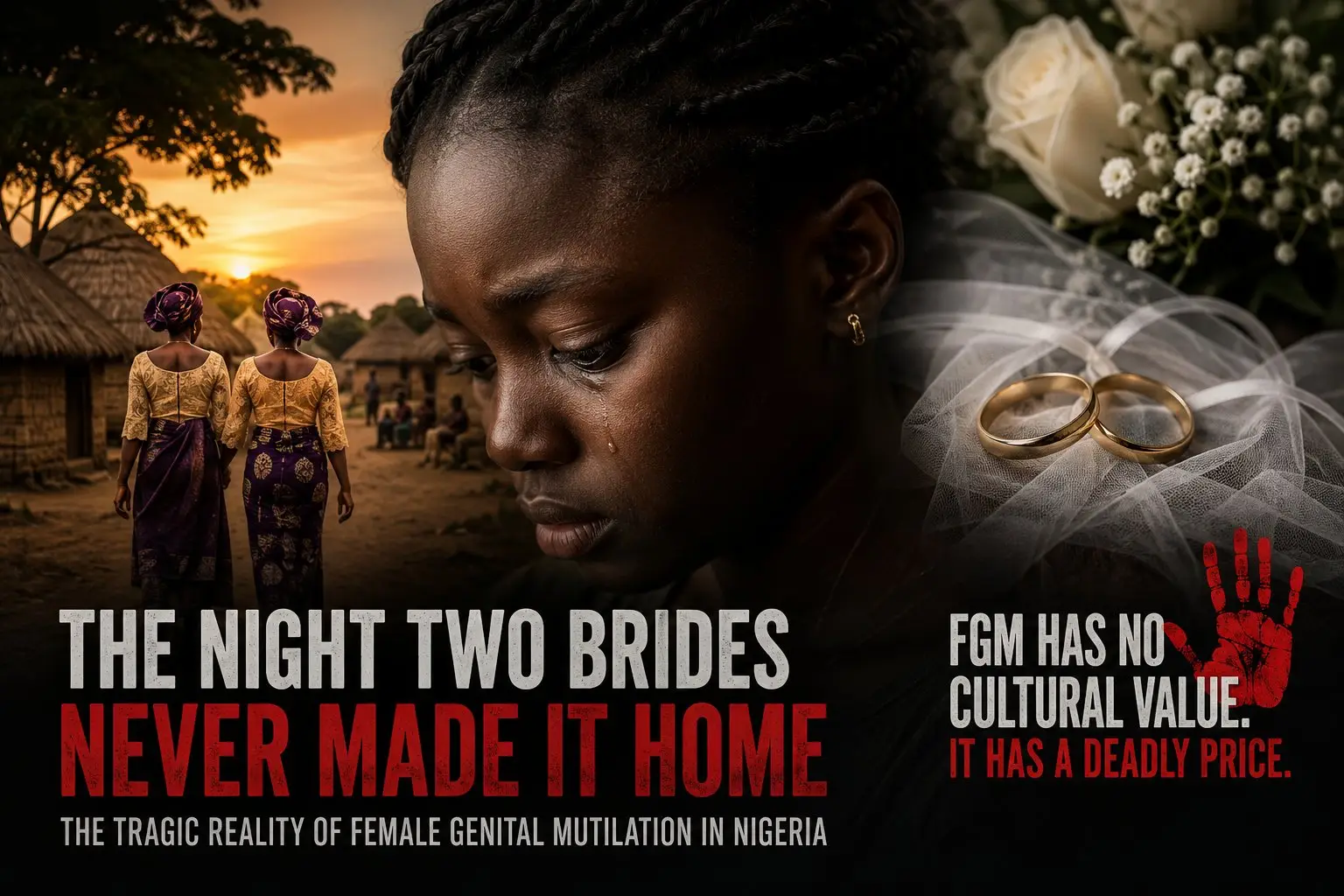
In a quiet village somewhere in Nigeria—a village that will remain unnamed to protect the identities of those involved—there once lived a man who was widely respected in his community. He was a father of two daughters, both young women known for their beauty, kindness, and strong character.
As fate would have it, both daughters found love around the same period. Their wedding ceremonies were celebrated with joy and excitement. Families gathered. Friends danced. Drums echoed through the village. The air was filled with laughter and prayers for prosperous marriages.
To everyone watching, it seemed like the beginning of a beautiful chapter in the lives of the two sisters.
But behind the smiles and celebrations, a devastating decision had already been made.
Their father, a firm believer in an age-old tradition, had arranged for both daughters to undergo female genital mutilation immediately after their marriage ceremonies. He believed he was doing what generations before him had done. He believed he was protecting family honour and preserving cultural values.
No one imagined the terrible consequences that would follow.
After the procedure was carried out, both young women began to bleed heavily.
At first, those around them hoped the bleeding would stop. They believed it was a normal part of the process. Hours passed.
The bleeding continued.
As night fell, the newly married brides left with their husbands for their matrimonial homes. What should have been a night filled with hope, celebration, and dreams of the future became a desperate struggle for survival.
The bleeding intensified.
Throughout the night, both women grew weaker and weaker. Their husbands watched helplessly as their new wives lost alarming amounts of blood. By dawn, tragedy had struck.
Neither woman survived.
The two sisters, who had danced at their weddings only hours before, were gone.
Two families were shattered.
Two husbands became widowers before their marriages had truly begun.
A father who believed he was honouring tradition was left to face a grief that would haunt him for the rest of his life.
A Tradition That Continues to Cost Lives
Although this story may sound unbelievable, it reflects the very real dangers associated with female genital mutilation (FGM), a practice that continues in some communities across Nigeria and other parts of Africa.
FGM involves the partial or total removal of external female genitalia for non-medical reasons. It has no health benefits. Instead, it exposes girls and women to severe physical and psychological harm.
Immediate complications can include:
- Severe pain
- Excessive bleeding
- Infection
- Shock
- Difficulty urinating
- Injury to surrounding tissue
- Death
Long-term consequences may include:
- Chronic pain
- Childbirth complications
- Infertility
- Emotional trauma
- Depression and anxiety
- Sexual health challenges
Despite increased awareness and legal efforts to eliminate the practice, many families still subject their daughters to FGM because of social pressure, fear of stigma, or deeply rooted cultural beliefs.
When Culture and Compassion Collide
Culture is an important part of identity. It connects us to our ancestors and gives communities a sense of belonging. But not every tradition deserves to survive unchanged.
History has shown that societies evolve. Harmful practices that once seemed normal are often abandoned when people recognize the damage they cause.
The question every community must ask is simple:
If a tradition causes suffering, injury, or death, should it continue?
The tragic story of these two sisters reminds us that protecting culture should never come at the expense of protecting lives.
The Role We All Must Play
Ending FGM is not the responsibility of governments alone. It requires collective action from parents, traditional leaders, religious leaders, healthcare workers, educators, and community members.
We must continue to educate families about the dangers of the practice.
We must create safe spaces where girls can speak up without fear.
We must support survivors.
And most importantly, we must challenge the belief that a girl’s worth, purity, or marriageability depends on a harmful procedure that puts her life at risk.
A Final Thought
Somewhere in that anonymous village, memories of those two young brides still linger. Their wedding songs have long faded. Their wedding clothes have long been packed away.
But their story remains.
It serves as a painful reminder that behind every statistic about female genital mutilation is a real person—a daughter, a sister, a wife, a friend.
The greatest tribute we can pay to those who have lost their lives because of FGM is to ensure that no other girl suffers the same fate.
No tradition should cost a child her future.
No custom should cost a woman her life.